
Here's what nobody tells you upfront about generative AI development services. The technology part is rarely what kills the project. What kills it is picking the wrong engagement model, burning through budget 40-60% faster than planned, or handing the build to a team that has made chatbot demos but never shipped anything real.
We've had this same conversation with US founders dozens of times over the past two years. It always starts with "we need a generative AI solution." Six months later, half of them are stuck with a prototype that works in staging and breaks the moment real users touch it.
This guide exists because that pattern is avoidable. I'll walk you through what these services actually cost in 2026, which engagement models hold up under pressure, and how to tell the difference between a vendor who ships and one who just pitches well.
What These Services Actually Cover
People throw around "generative AI development" like it means one thing. It doesn't. At a production level, the work spans a handful of very different capabilities:
- LLM-based application development for chatbots, copilots, and content tools
- Custom model fine-tuning on your specific data and domain
- Voice synthesis and cloning for conversational AI products
- RAG pipelines that pull from your own knowledge base instead of hallucinating
- AI copilot interfaces that sit inside existing workflows
Most serious generative AI development companies also handle what's underneath all of that: vector databases, embedding strategies, inference optimization, and drift monitoring. If a vendor only talks about the model layer and skips the infrastructure, that should tell you something.
Generative AI development solutions built without proper production infrastructure have a pattern. They work great in the demo. They fall apart under real user load. A prototype and a scalable product are two completely different engineering problems and most teams only know how to build the first one.
What This Actually Costs in 2026
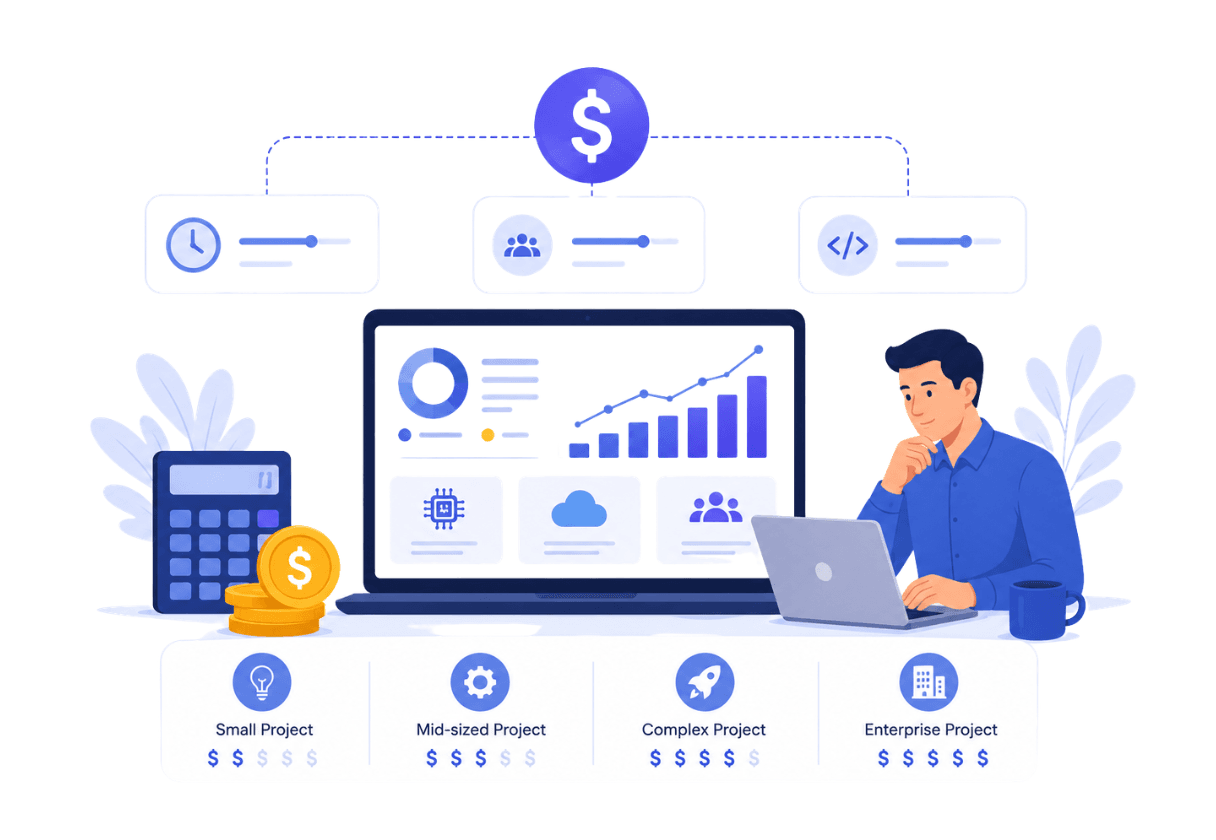
Every founder asks about cost first. The honest answer is that it depends on scope, but "it depends" doesn't help anyone plan a budget. So here are real numbers based on what we're seeing in the market right now.
- Basic AI features like internal chatbots or document assistants run $40,000 to $150,000
- Mid-complexity applications with custom fine-tuning, multi-model orchestration, or domain-specific RAG fall between $100,000 and $350,000
- Full enterprise platforms with proprietary model training and compliance layers push past $500,000
Here's the part most budgets completely miss. The build cost is just the beginning. Token usage fees, GPU cloud infrastructure, vector database upkeep, and periodic model retraining can eat up 60% of your total spend over three years.
When you hire generative AI developers or evaluate a development partner, ask them to quote the first 18 months. Not just the build phase. If they only quote the build, they're either new to this or hoping you won't ask about the rest until the invoice lands.
Engagement Models: Which One Actually Works
Three models dominate this space right now. Each one fits a different situation and each one breaks in a specific way when misapplied.
Dedicated team model
The safest bet for anything longer than four months. You get a small consistent team, usually 2-5 people, who build deep context on your product over time. This is what most generative AI development services providers recommend for enterprise work, and honestly it produces the most reliable outcomes for complex AI builds. Requirements always shift once real data enters the picture. A dedicated team absorbs that without falling apart.
Fixed-scope project model
This project model works when the deliverable is crystal clear upfront. A specific chatbot. A document processing pipeline. A single AI feature bolted onto an existing product. The danger is that generative AI projects almost always surface new requirements once real data flows through the system. Budget overruns of 60-150% are common when scope gets locked too early. We've watched it happen repeatedly.
Staff augmentation
Staff augmentation fills skill gaps on your existing team. Makes sense when you already have engineering leadership and just need specialized AI talent for a stretch. But it collapses when there's no internal AI architecture for the new people to plug into. Augmented engineers without clear system ownership tend to build fragments instead of products.
How We Evaluate Generative AI Partners
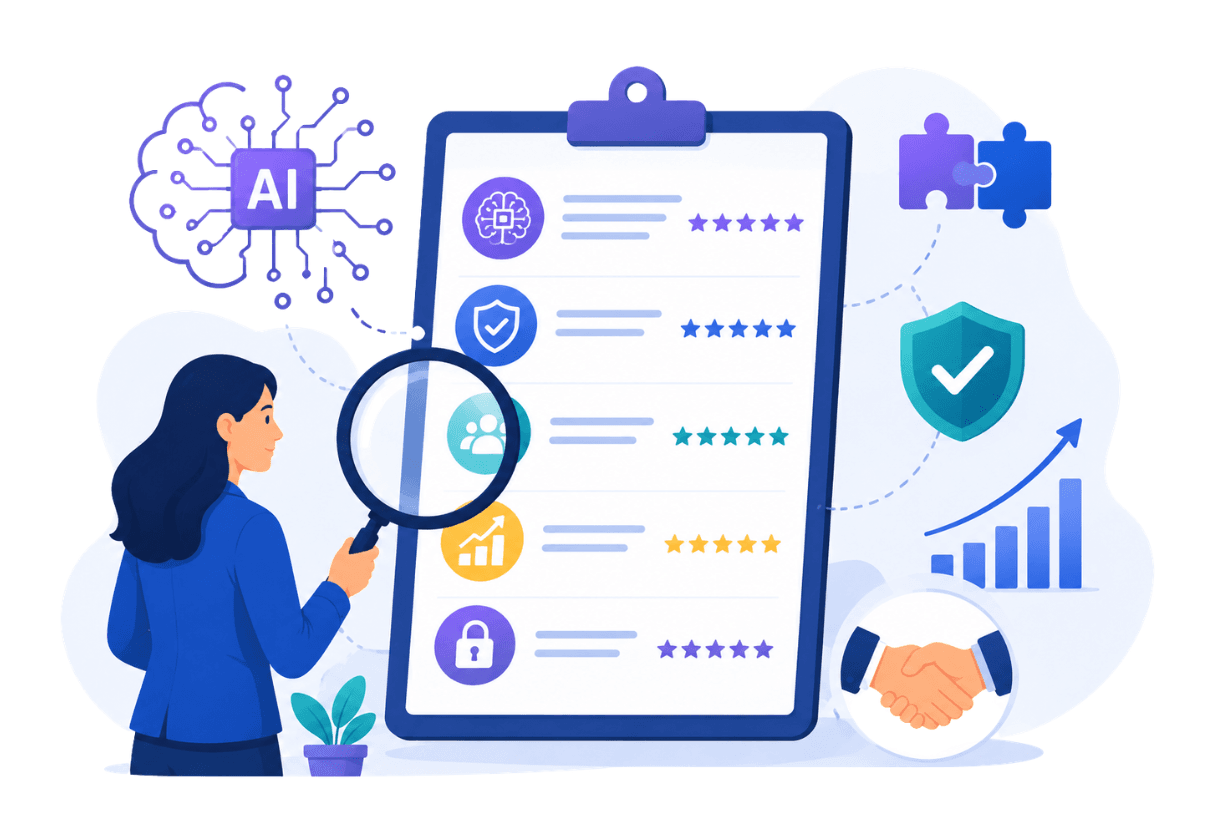
The generative AI vendor market exploded in 2024 and hasn't slowed down. LinkedIn alone shows over 4,000 companies calling themselves AI development partners in the US right now. Most of them launched in the last 18 months. Most of them have built exactly one chatbot wrapper around the OpenAI API and listed it as a case study.
After building AI projects spanning voice synthesis, conversational platforms, and LLM-powered applications, we've learned that the hard way what actually separates real generative AI development companies from those coasting on the hype.
Four things consistently predict whether a partner will deliver or waste your budget:
Production systems over prototype count -
Anyone can build a GPT wrapper in a weekend. Ask specifically how many of their AI products are running in production right now with real paying users. If the answer is vague or they redirect to a demo video, that tells you everything. We've seen founders burn six figures on teams whose entire portfolio was proof-of-concepts that never launched.
Team composition you can actually verify -
A credible partner names exactly who will work on your project. The ML engineer, the backend developer, the infrastructure specialist. Ask for LinkedIn profiles. Ask how long these people have been with the company. High turnover on AI teams is one of the biggest hidden risks in this space and nobody talks about it during the sales call.
Architecture-first approach before any code -
The right team spends the first two weeks mapping your data flow, latency tolerance, failure modes, and model selection rationale. If a vendor jumps straight into building after one discovery call, they're guessing. We learned this building voice AI systems where a wrong architecture decision in week one meant rebuilding the entire pipeline in month four.
Post-launch plan that exists before launch -
The best generative AI development company scopes model monitoring, retraining schedules, token cost optimization, and drift detection into the original proposal. Not as a phase two conversation after the invoice clears. Ask to see their post-launch support structure in writing before you sign. If it doesn't exist, your production system is one model update away from breaking silently.
One more thing most evaluation guides skip entirely. Ask the vendor what went wrong on their last AI project and how they handled it. Every real project hits unexpected problems. The answer to that question reveals more about a partner's maturity than their entire pitch deck combined.
How to Pick the Right Partner
Finding generative AI development solutions that hold up in production starts with asking better questions. Don't ask "can you build this?" Every vendor on earth will say yes. Instead ask "show me a system you built that's still running in production after 12 months." That single question filters out 80% of the noise instantly.
A few more things worth checking before you sign anything:
- Ask for a reference call with a client whose project launched more than six months ago
- Check whether they quote ongoing infrastructure costs or just the build
- Look at team composition for your project specifically, not their company roster
- Ask how they handle the moment when the model doesn't behave the way the demo promised
The companies that survive the current wave of AI development won't be the ones with the flashiest pitch decks. They'll be the ones whose clients' products are still running, still scaling, and still making money a year after launch. That's the standard RemoteState holds itself to as a generative AI development services provider, and the case study below shows what that looks like on a real project.
RemoteState’s Client Success Story
One project that stress-tested every part of this framework was a conversational AI platform that needed lifelike voice interactions with digital avatars of real-world leaders and motivators. Not a simple chatbot. A system that could clone real voices with high fidelity, personalize conversations based on user goals, and handle both text and voice in real time.
The team was deliberately lean: one AI engineer, one fullstack developer, and one voice specialist. Development ran seven months from ideation through deployment.
What got built:
- Context-aware language models powering personalized conversations with each avatar
- Custom voice cloning and speech synthesis pipelines producing lifelike output across multiple personalities
- Admin dashboard for managing leader profiles, knowledge bases, and interaction analytics
- Full production infrastructure handling real users from day one
The results:
- 24,000+ app downloads within the initial rollout period
- 11% revenue conversion rate from free users to paid
- Voice cloning pipeline delivering consistent quality across multiple avatar personalities
- Real-time analytics tracking engagement depth and conversation quality
When you hire generative AI developers for something this complex, the difference shows in whether the team can handle model training, voice engineering, backend infrastructure, and user-facing product all under one roof. Most can't. Want to see the complete project breakdown? Read the full case study here
Frequently Asked Questions
How much do generative AI development services cost for a mid-size business?
Most mid-complexity projects run between $100,000 and $350,000 for the initial build. Ongoing costs including cloud infrastructure, API token fees, and model maintenance can add 40-60% over the following two years.
What is the difference between fine-tuning and building a custom generative AI solution?
Fine-tuning adapts a pre-trained model to your data and use case, typically costing $20,000 to $80,000. A custom solution includes the fine-tuned model plus everything around it: data pipelines, APIs, user interfaces, monitoring, and deployment infrastructure.
How long does it take to build a production generative AI application?
Simple applications like internal chatbots take 6-10 weeks. Complex systems involving voice synthesis, multi-model orchestration, or enterprise integrations typically run 4-7 months from kickoff to deployment.
Should I outsource generative AI development or build in-house?
Outsource when you need specialized AI skills fast and don't have internal ML leadership. Build in-house when AI is your core product, not a feature. Many companies start by outsourcing to a generative AI development company, then bring capabilities internal once the system stabilizes.
Which industries use generative AI development services most in 2026?
Healthcare, fintech, legal tech, and e-commerce lead adoption. The common thread is automating high-volume knowledge work that previously required expensive human specialists.
Final Thoughts
Generative AI development is past the experimentation phase now. Cost structures are getting clearer, engagement models are better understood, and the gap between vendors who ship and vendors who pitch is getting wider every quarter. The founders who get this right in 2026 won't be the ones who spent the most money. They'll be the ones who picked partners with actual production experience and structured the engagement to survive scope changes, budget surprises, and the inevitable moment when the model stops behaving the way it did in the demo.
If you're looking for a generative AI development services provider that builds with that mindset, RemoteState would be worth a conversation.
Generative AI development services in USA: real costs, proven engagement models, and what separates partners who ship from those who just pitch.


