
I'll tell you what nobody warns you about before a healthcare app build. It's not the code that kills the project. It's the assumption that building a medical product works the same way as building any other app. It doesn't. Not even close.
We've shipped healthcare products across pharmacy automation, chronic care management, voice-powered clinical tools, and remote patient monitoring over the past few years. And the same story keeps playing out. A team skips the compliance homework, sprints into development, and then spends the next six months rebuilding features they thought were finished. Expensive. Avoidable. And way more common than anyone admits publicly.
So here's what custom healthcare app development actually looks like in 2026. Straight from builds we've been inside. No recycled checklists.
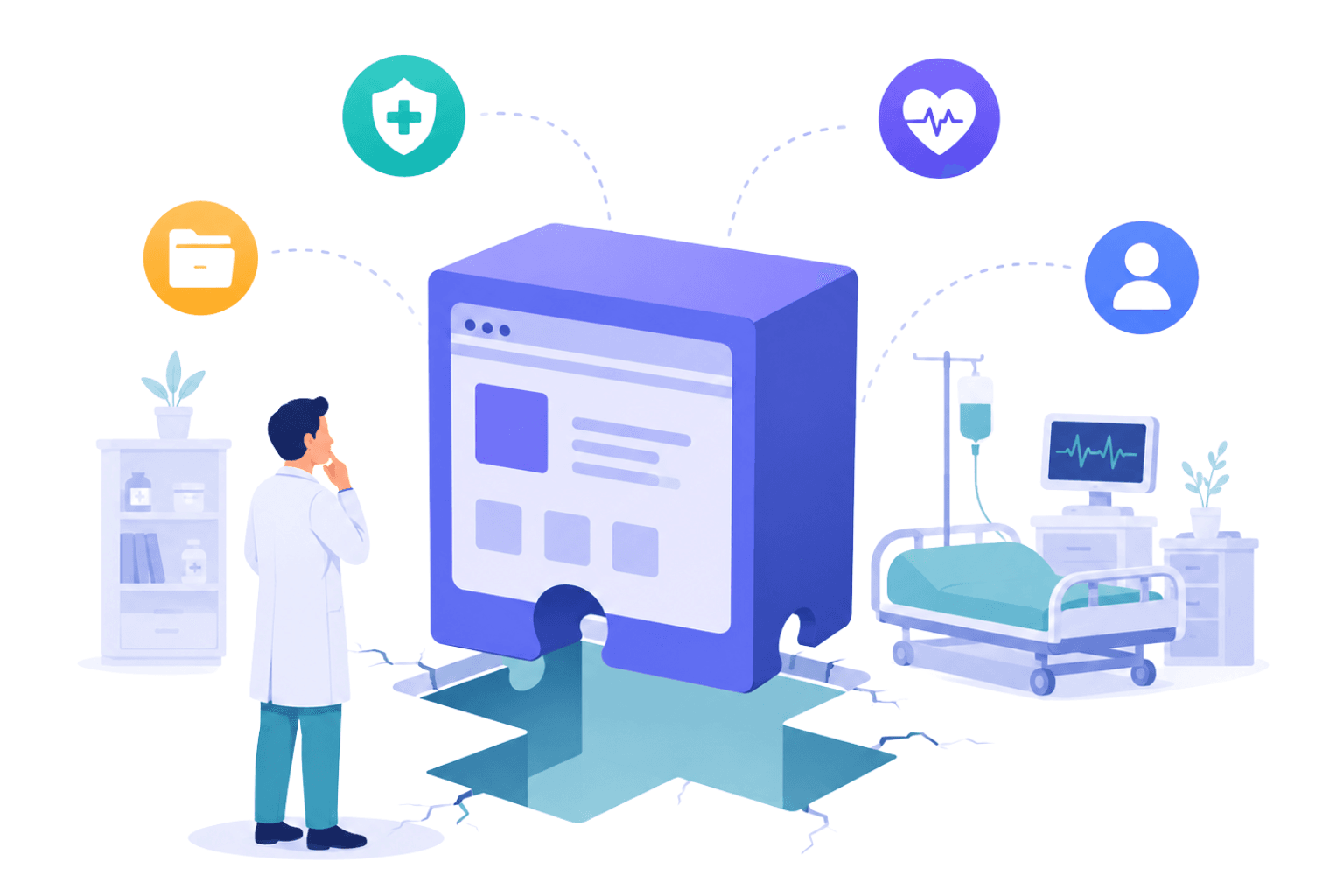
Why Generic Software Doesn't Survive in Clinical Settings
Healthcare apps aren't standalone products. They live inside messy ecosystems of EHR platforms, insurance portals, lab systems, and regulatory frameworks that no generic tool was ever designed to handle.
The Integration Problem - A scheduling app that can't talk to Epic or Cerner is functionally useless in most US hospitals. Doctors won't open a second system just because your UI is prettier. They'll ignore it and go back to what already works, even if what already works is terrible.
The Compliance Problem - A patient monitoring tool that stores vitals data without HIPAA-grade encryption isn't just a bad product. It's a legal liability that can shut down your entire company. And I'm not being dramatic. We've seen founders discover this after launch, not before.
Why Custom Is the Default Now - Custom software development for healthcare became the standard because clinical environments are too specific for anything off the shelf. Pre-built platforms handle maybe 60 to 70 percent of what a healthcare org actually needs. That remaining 30 percent? That's where patient safety lives. Where compliance gets stress-tested. Where your product either earns trust or gets uninstalled.
That gap is exactly why custom software development for healthcare is now the default for any serious clinical product being built in 2026. Not because custom is trendy. Because generic doesn't survive.
What the Build Process Looks Like When You're Doing It for Real
Healthcare app development runs on a completely different sequence than normal product builds. I'll walk you through how it actually goes once you're past the pitch deck and into the work.
Step 1: Compliance Scoping Before Anything Else
Before a single wireframe exists, you need absolute clarity on which regulations apply to your specific product. HIPAA is the floor for anything touching US patient data. But depending on what you're building, you might also need FDA SaMD clearance for clinical decision tools, GDPR coverage if European users are in scope, or some obscure state-level privacy law your lawyer hasn't flagged yet.
A credible custom healthcare software development company figures this out before they quote you a price. If someone gives you a timeline without asking about your compliance requirements first, that should worry you.
Step 2: Architecture and Integration Planning
Healthcare apps almost never exist in isolation. They need to swap data with EHR systems through HL7 or FHIR protocols. They plug into pharmacy APIs for prescription management. They sync with wearable devices for remote monitoring. And they run through multiple layers of authentication that most consumer apps never deal with.
Getting the integration architecture wrong early on creates rework that costs more than the original build. We've watched it happen. A team builds the product assuming they'll "figure out Epic integration later." Later turns out to be a four-month detour that blows the budget apart.
Step 3: MVP That Gets Tested by Real Clinicians
MVP in healthcare doesn't mean a half-finished app with a waitlist page. It means the smallest version of your product that can survive a real clinical workflow. One department. One specialty. Actual physicians using it with actual patients under actual time pressure.
This step is where your choice of a custom healthcare software development company matters the most. Partners who've done clinical validation before know what to build for that first test. Partners who haven't will build features doctors never asked for and skip the ones they actually need.
What Custom Healthcare App Development Actually Costs in 2026
Every founder asks this before anything else so let me skip the "it depends" and give you actual numbers we're seeing across real engagements right now.
By App Complexity
- Basic patient-facing apps like appointment booking, medication reminders, or simple patient portals with standard HIPAA compliance: $40,000 to $80,000. Typically 2-3 engineers, 4-6 months.
- Mid-complexity clinical apps with EHR integration, pharmacy API connections, telemedicine features, or multi-role dashboards: $80,000 to $200,000. Integration work alone eats 30-40% of that budget. This is where most healthcare startups underestimate scope badly.
- AI-powered healthcare platforms involving computer vision, clinical NLP, predictive models, and multi-system compliance infrastructure: $300,000 and up. These need specialized AI talent on top of your core engineering team.
By Engagement Model
- Dedicated team model works best for ongoing healthcare products where requirements shift as clinical feedback comes in. Monthly cost runs $15,000 to $45,000 depending on team size and seniority.
- Fixed-scope project model works for well-defined builds like a single telemedicine feature or a patient portal. But healthcare projects almost always surface new compliance requirements mid-build. Budget overruns of 40-80% are common when scope gets locked too early.
- Staff augmentation fills specific skill gaps on your existing team. Rates run $35 to $75 per hour for HIPAA-experienced engineers. Makes sense only when you already have internal engineering leadership and architecture in place.
The Part Nobody Warns You About
Those numbers are just the build cost. HIPAA-compliant cloud hosting, ongoing security audits, compliance updates, and infrastructure maintenance add 40-50% annually on top of that. When you're evaluating any partner, ask them to quote the first 18 months. Not just the build phase. If they only quote the build, they're either new to healthcare or hoping you won't notice the rest until the invoice shows up.
The AI Conversation That Starts Every Other Call
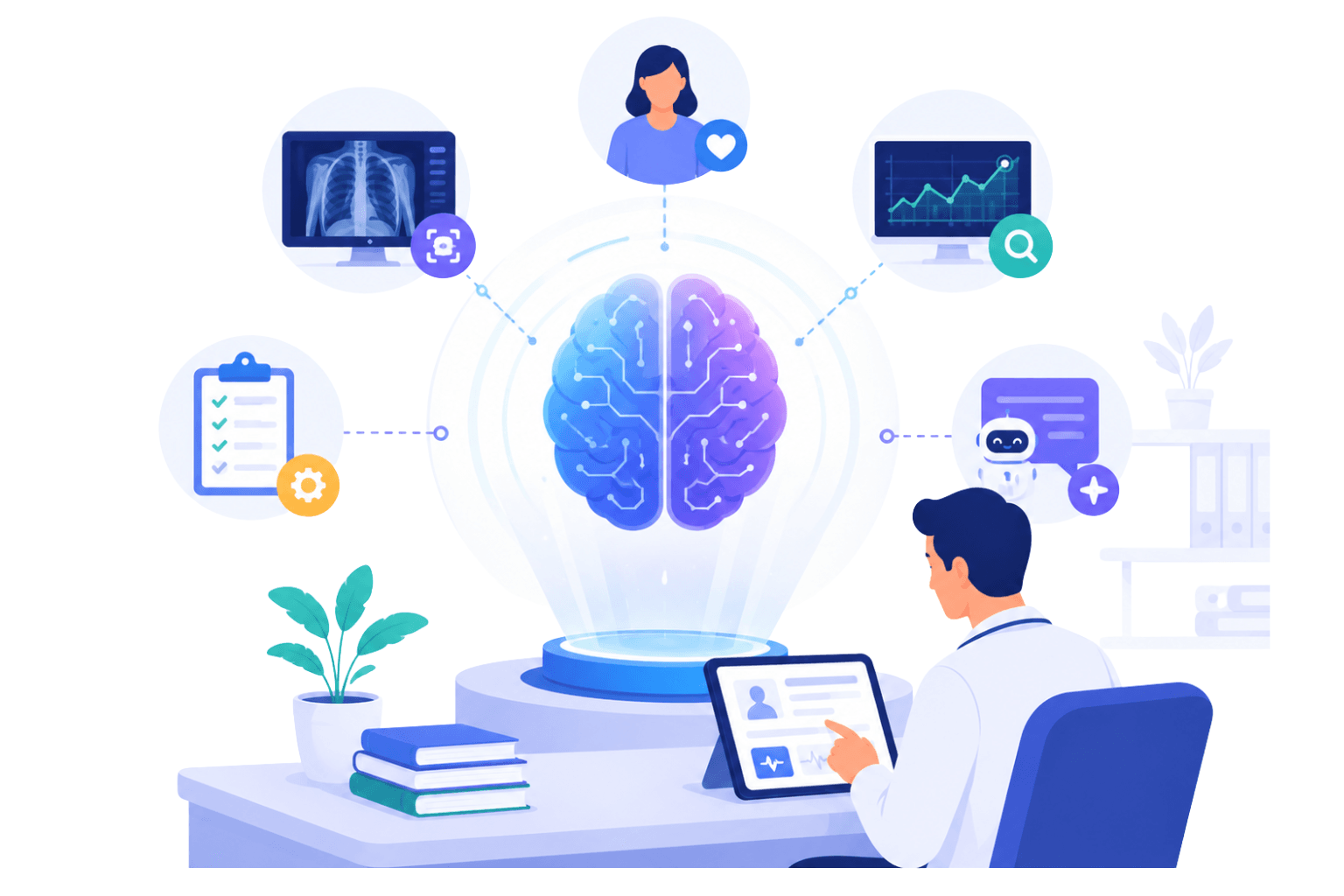
About half the healthcare founders we talk to in 2026 open with some version of "we want AI in our app." And honestly that's a reasonable ambition. But here's the thing. AI healthcare app development only delivers real value when the AI solves a specific clinical problem. Not when it's bolted on so someone can say "AI-powered" on the landing page.
Where AI Actually Works in Healthcare - Computer vision that identifies pills from a phone photo. NLP that turns a doctor's spoken notes into structured clinical documentation. Predictive models that flag patients at risk of hospital readmission before it happens. These are proven, shipping, making-a-difference applications.
Where AI Falls Apart - Every one of those use cases needs clean training data specific to the medical domain. It needs validation by actual clinicians who'll tell you honestly if it helps or slows them down. And it needs someone monitoring the model after launch because medical AI that drifts silently is genuinely dangerous. A diagnostic AI that scores 94 percent accuracy in a research paper can completely fall apart in a noisy ER at 2 AM with blurry images and incomplete patient histories. We've seen it.
The Right Approach - Our take on AI healthcare app development is deliberately narrow. Find one bottleneck where AI measurably improves the clinical outcome. Build that single thing well. Test it with doctors who have no reason to be polite about the results. Then expand once you've earned clinical trust. Anything broader than that at the start is a recipe for burning budget on AI that doesn't get used.
How to Pick a Partner Without Wasting Six Months and a Lot of Money
Choosing a custom healthcare software development services provider comes down to four questions. Not how big their team is. Not what their hourly rate looks like. These four.
Ask About HIPAA Beyond Production
Most development teams can set up HIPAA compliance in production. That's table stakes. The question is what happens in staging and dev environments. Patient data leaks in test environments are one of the most common compliance failures we've seen, and most teams don't even realize it's happening until an audit catches it.
Demand Proof of Real EHR Integration
Have they actually connected a live product to Epic, Cerner, or Athenahealth with real patient data flowing through? Not a sandbox. Not a demo. The real system with all the ugly edge cases that only show up when actual clinical data hits the pipeline. If they can't name the specific EHR systems they've integrated with, keep looking.
Test Their Clinical Workflow Knowledge
Ask them to walk you through what happens between a patient checking in at reception and a physician signing off on their chart notes. If the development team can't describe that journey with any specificity, the app they build will fight the clinical workflow instead of fitting into it. And doctors abandon tools that add friction. Every single time.
Check Their Post-Launch Compliance Plan
Regulations change. New CMS rules drop. State-level privacy laws get updated. A strong custom healthcare software development services partner already has a documented process for ongoing compliance audits, security patches, and documentation updates. Not just a certification PDF they hand you on launch day and disappear.
How RemoteState Approaches Healthcare Builds
RemoteState works with healthcare founders who need engineers that genuinely understand what shipping a regulated clinical product involves. Not teams that treat HIPAA like a checkbox they'll handle the week before launch.
Compliance Before Code
Every engagement starts with compliance and integration mapping. Before anyone opens a code editor, we know which regulations apply, which EHR systems need to connect, and where the data residency requirements sit. This isn't a formality. It's the step that prevents the expensive surprises in month four that kill most healthcare projects.
Small Teams, Deep Expertise
Teams stay deliberately small. Three to four engineers is the norm. Healthcare builds need depth, not headcount. One backend developer who genuinely understands HIPAA-grade data architecture and has done it before is worth more than five generalists learning compliance on the fly.
Clinical Testing Before Full Rollout
Nothing ships to production without being tested by real clinicians in a real workflow first. Not a demo. Not a simulated environment. Actual doctors and nurses using the tool under actual clinical pressure and telling us what's broken.
RemoteState's Client Success Story
One of the hardest healthcare projects we've worked on was an AI-powered assistant for patients dealing with chronic conditions. And I want to be clear. This was nothing like a medication reminder app.
What Made It Hard - The app needed computer vision to scan and identify pills from a phone camera. It had to extract vital signs from selfie-based facial analysis. And the entire backend ran on AWS with Kubernetes orchestration handling real-time health data processing at a scale that most early-stage healthcare startups aren't remotely prepared for.
The Real Challenge - But honestly the toughest part wasn't building the AI models. It was making everything work inside a HIPAA-compliant infrastructure where every single data point, every patient image, every health reading had to be encrypted at rest and in transit, logged for audit trails, and deletable on request. Building cool AI is one thing. Building it inside a compliance cage without breaking either the AI or the compliance is a different problem entirely.
The Team and Timeline - Three engineers. One backend developer. One DevOps specialist. One AI/ML engineer. Ten months from first meeting to live product.
Results
- 50,000+ downloads in the first year without spending a dollar on paid acquisition
- 250% revenue growth driven entirely by organic user adoption and word of mouth
- 95%+ pill recognition accuracy even in poor lighting conditions
- Platform acquired by Cairns Health and now powers Luna AI for voice-enabled chronic care nationwide
Want the full breakdown?
Read the complete case study here
Frequently Asked Questions
How much does custom healthcare app development cost in 2026?
Simple patient-facing apps start around $40,000 to $80,000. Add EHR integration and you're looking at $80,000 to $200,000. Full AI-powered platforms with serious compliance infrastructure push past $300,000 depending on what you're building.
How long does it take to build a HIPAA-compliant healthcare app?
A focused MVP usually takes 4 to 6 months. A complete product with EHR connections, AI features, and clinical validation runs 8 to 14 months. Anyone quoting you less probably hasn't scoped compliance properly.
What's the real difference between custom and off-the-shelf healthcare software?
Off-the-shelf handles common workflows but your team bends around the software's logic. Custom builds match your clinical processes, your integrations, your compliance needs. You own the code. You control the data. You decide how it scales.
Should I add AI to my healthcare app?
Only if it fixes a specific clinical problem you can actually measure. Bolting AI onto a healthcare app for pitch deck purposes just adds cost and regulatory complexity without improving outcomes for patients or clinicians.
How do I choose the right healthcare app development company?
Four things: HIPAA depth beyond production environments, proven EHR integration with live clinical systems, genuine understanding of clinical workflows, and a documented post-launch compliance process. Those matter more than team size or rate cards.
Conclusion
Building a healthcare app that actually works in clinical environments needs more than smart developers. It needs people who understand the distance between writing code and shipping a product that doctors and patients depend on every single day.
If you're planning a healthcare build and want to think through the compliance and technical groundwork before committing to anything, talk to RemoteState.
How much does custom healthcare app development actually cost in 2026? Read our raw breakdown of HIPAA compliance, EHR integration, and AI features.


